In the semiconductor packaging and testing (OSAT) field, accurate tracking of carriers such as FOUPs and wafer boats is crucial for improving yield and efficiency. Ultra-micro UHF RFID technology is the preferred choice due to its non-contact and batch reading capabilities, but the harshness of the semiconductor environment (chemical corrosion, electrostatic discharge, metal interference) places extreme demands on the hardware.
This article provides a specialized comparison of leading global ultra-micro RFID hardware suppliers for 2026, based on real-world semiconductor environment test data, offering authoritative guidance for your hardware selection.
Core Challenges and Test Benchmarks in Semiconductor Packaging Environments
Successful deployment first requires the hardware to pass the following “stress tests”:
- Chemical Resistance: Tags and readers must withstand long-term exposure to cleaning solvents such as IPA and acetone.
- ESD Protection: All components must meet the HBM Class 2 (≥4kV) electrostatic discharge protection standard to prevent damage to sensitive wafer products.
- Metal Environment Performance: Maintain a stable read/write success rate (typically >99.5%) near dense AMHS tracks and storage racks with metal carriers.
- Cleanroom Compatibility: Tag packaging materials must meet ISO 14644-1 Class 3 or higher cleanroom requirements, without outgassing contamination.
2026 Mainstream Ultra-Micro RFID Hardware Supplier Comprehensive Comparison
The following comparison focuses on leading suppliers providing core chips, tags, and readers for semiconductor environments.
| Supplier/Dimension | Core Chip/Tag Solution | Advantages in Semiconductor Environment Adaptation | Potential Considerations |
| Impinj | Monza R6-P / M780 series tag chips, supporting presence sensing. | Industry benchmark, multi-tag reading algorithm (Dense Reader Mode) performs excellently in dense environments; most complete ecosystem. | High-end positioning, higher overall cost of ownership; deep optimization depends on partners. |
| Alien Technology | Higgs-9 series chips, offering various miniature packages. | Outstanding cost-effectiveness and a rich product line; proven robustness against humidity and temperature fluctuations. | Anti-collision performance in extremely dense tag scenarios is slightly inferior to top competitors. |
| NXP | UCODE 9 series chips with outstanding security features. | UCODE DNA provides hardware-level encryption, suitable for high-value product traceability; high chip sensitivity. | As a chip manufacturer, it does not directly provide complete reader solutions; system integrators are needed for integration. |
| Zebra Technologies | Provides complete industrial tags based on mainstream chips. | Offers end-to-end solutions from tags to software, easy to deploy. | Relatively low solution flexibility, limited space for deep customization. |
| RFIDHY | Does not manufacture chips, but provides deeply customized tag and antenna designs based on the above chips. | The core value lies in customization: providing tag packaging and antenna optimization for specific carrier materials (such as carbon fiber, PEEK), installation locations, and reading distances, ensuring a read/write success rate of 99.9%+ at the customer site. | Does not manufacture silicon chips, but maximizes chip performance, acting as a “bridge” connecting top-tier chips with complex scenarios. |
Key Selection Criteria: Customized Integration Capabilities Beyond Standard Parameters
The layout, carrier types, and processes of semiconductor packaging workshops vary greatly. The success of hardware selection often depends not on the nominal parameters of the chip, but on integration and optimization. For example:
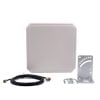
- Antenna Design and Tuning: Near metal-filled Load Ports, customized circular polarized antennas and precise power tuning are required to create a stable read/write area.
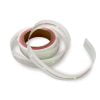
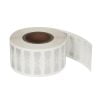
- Tag Packaging and Installation: For carriers that need to undergo plasma cleaning, experts like RFIDHY use ceramic packaging and laser welding processes to ensure the long-term airtightness and reliability of the tags.
- Data Filtering and Processing: Deploying edge computing devices to perform real-time filtering and logical judgment on raw data from the reader, only reporting meaningful events (such as “FOUP 123 has entered the deposition equipment buffer”) to the MES, reducing network load.
Q&A
1.In a semiconductor factory, how can the deployment of the reader network avoid interfering with sensitive production equipment?
This needs to be solved through a rigorous on-site radio frequency site survey. A professional team uses a spectrum analyzer to measure background noise in the environment during both standby and operation of production equipment, and plans the reader’s operating channels, transmission power, and installation location to ensure full compliance with the fab’s EMC specifications. This is a critical step performed by RFIDHY before deployment.
2.How to ensure a smooth transition in a mixed environment with both barcodes and RFID?
A “dual-frequency” or “dual-mode” terminal strategy is recommended. For example, in the initial stage, forklifts can be equipped with mobile terminals that integrate both RFID readers and barcode scanners. Both RFID tags and barcodes can be attached to the carriers, and the system collects data in parallel. After the RFID system’s read/write success rate is fully verified (e.g., >99.5% for 30 consecutive days), the barcode scanning process can be gradually phased out. This gradual approach minimizes risk.
3.How to quantitatively evaluate the ROI of an RFID project in a semiconductor packaging plant?
The core ROI indicators should revolve around operational efficiency and quality costs:
1) Reduced carrier search time (typically a reduction of over 70%);
2) Reduced WIP (work-in-progress) inventory (a 5-15% reduction through precise tracking);
3) Elimination of incorrect material handling and batch mixing risks;
4) Savings in labor costs for meeting customer traceability audits.
The typical payback period for a medium-sized OSAT factory is 18-24 months.
Conclusion
The 2026 RFID vendor comparison shows that the performance differences in core chips are narrowing, and the focus of competition is increasingly shifting to a deep understanding of the semiconductor environment and the ability to provide customized integrated solutions. Impinj, Alien, and others provide excellent basic hardware, but the true read/write success rate and system reliability depend on optimizing this hardware for the specific fab environment.
Therefore, choosing a solution partner like RFIDHY, which possesses both top-tier hardware integration capabilities and profound knowledge of semiconductor processes, is often more likely to ensure project success and achieve stable, high-value asset tracking and data closed-loop management than simply choosing a single brand of hardware.
Leave your contact detail now to get the latest price!