Why Production Line Tracking Demands More Than Barcodes
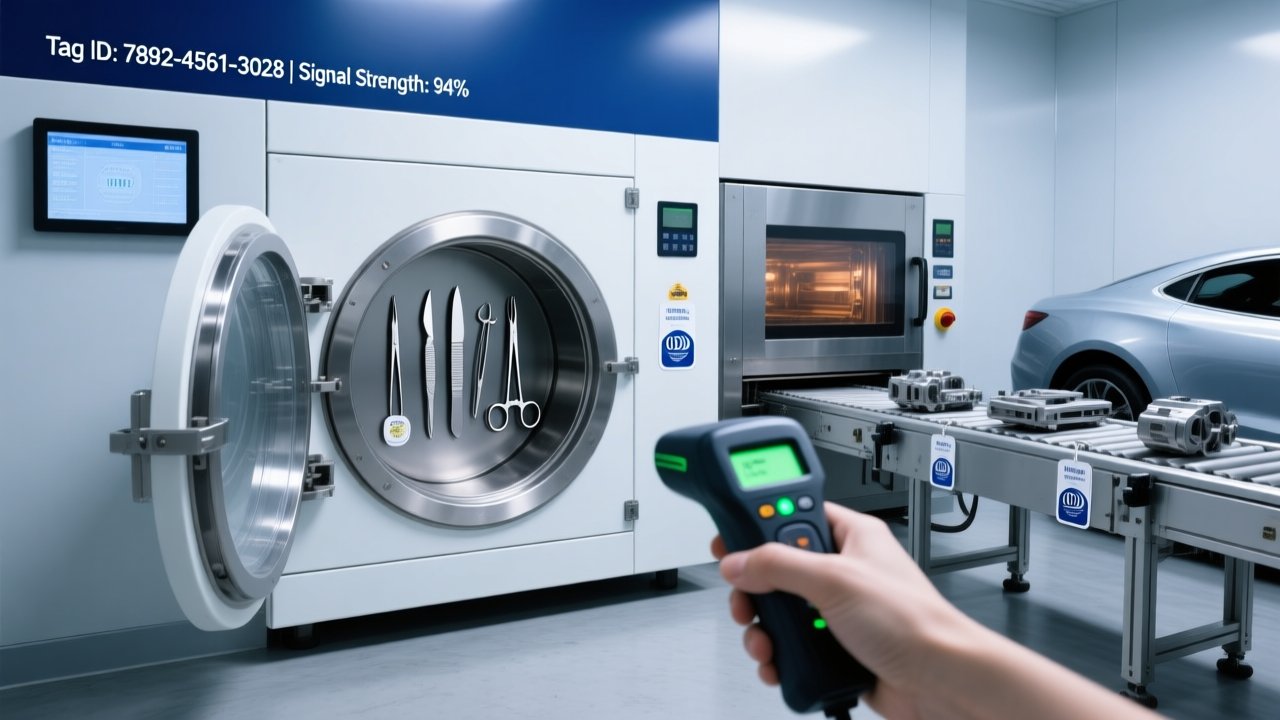
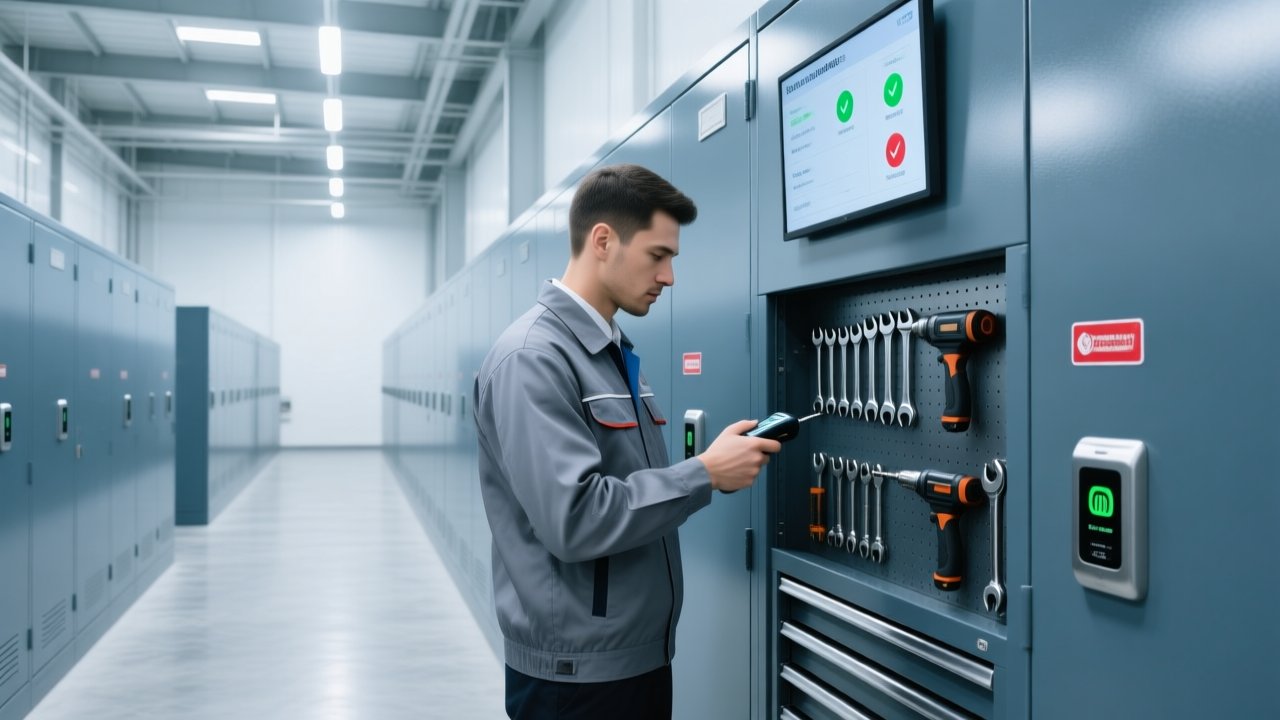
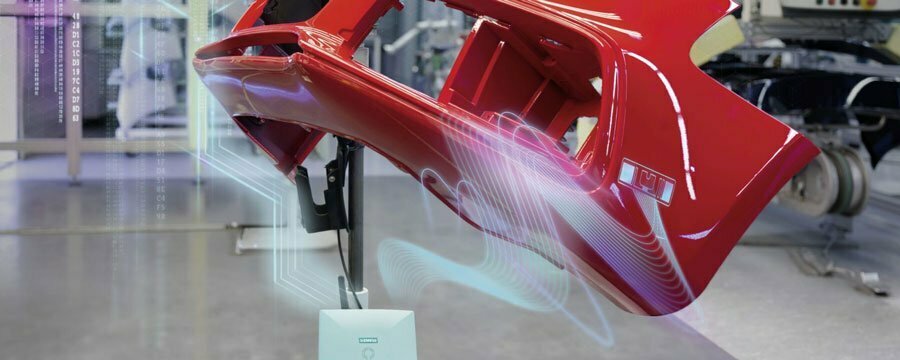
Modern industrial manufacturing requires real-time visibility across assembly lines, work-in-progress (WIP) stations, and finished goods logistics. While QR codes have long served as a low-cost identification method, their limitations become critical under factory-floor conditions: manual scanning, line-of-sight dependency, surface degradation, and inability to scale with automation. In contrast, RFID in manufacturing enables contactless, bulk-read identification — a foundational enabler for Industry 4.0 digitization.
Core Technical Differences
RFID (Radio-Frequency Identification) and QR (Quick Response) codes operate on fundamentally different principles. QR codes are optical, two-dimensional machine-readable symbols requiring direct line-of-sight and illumination. RFID uses electromagnetic fields to automatically identify and track tags attached to objects — enabling reads through non-metallic materials, at distance, and without orientation constraints.
Read Speed & Throughput
A single UHF RFID reader can identify 50–200 tagged items per second — ideal for conveyor belt tracking or pallet-level verification. QR code scanning is inherently serial: each code must be individually framed and decoded by a camera or imager. This creates bottlenecks in high-volume production environments where cycle time is measured in seconds.
Environmental Resilience
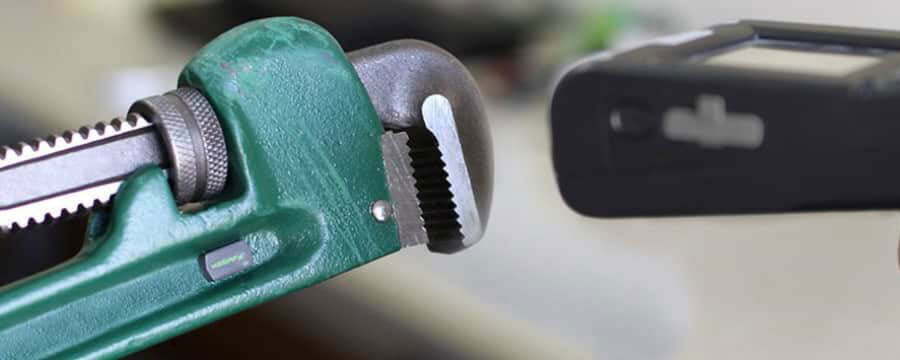
Production lines expose identifiers to oil, coolant, abrasion, vibration, and temperature fluctuations. QR codes printed on standard labels rapidly degrade, smudge, or delaminate. Industrial-grade anti-metal RFID tags withstand harsh conditions — many rated IP68/IP69K — and remain readable even when mounted directly on machinery or metal tooling.
Side-by-Side Performance Comparison
| Feature | QR Code | UHF RFID |
|---|---|---|
| Read Method | Optical (line-of-sight required) | Radio frequency (no line-of-sight) |
| Bulk Read Capability | No — one at a time | Yes — dozens simultaneously |
| Read Range | Up to 1–2 meters (ideal lighting) | Up to 12+ meters (with fixed readers) |
| Durability on Metal/Liquid | Poor — requires special substrates | Excellent — engineered for on-metal use |
| Integration with PLC/SCADA | Limited — typically via USB/serial interface | Native — supports Modbus TCP, EtherNet/IP, MQTT |
Total Cost of Ownership Considerations
While QR code printing appears cheaper upfront, hidden costs accumulate over time: labor for manual scanning, reprints due to label damage, downtime from misreads, and integration overhead. RFID systems — especially those built on open-standard protocols like EPC Gen2v2 — offer long-term scalability. RFID readers such as the HY-RU6508 fixed reader support multi-zone coverage across large assembly cells, reducing hardware footprint and maintenance complexity.
When QR Codes Still Make Sense
QR codes retain value in low-throughput, low-automation contexts — for example, final quality assurance documentation, operator-facing work instructions, or temporary asset tagging during commissioning. However, for continuous, automated production line tracking — particularly involving metal parts, moving conveyors, or mixed-material assemblies — RFID delivers superior reliability, speed, and integration fidelity.
FAQs
- Can RFID tags be used alongside existing QR code systems? Yes — hybrid deployments are common during transition phases. RFID handles automated WIP tracking, while QR codes manage human-readable documentation or compliance data.
- Do RFID tags interfere with factory equipment or other wireless systems? Modern UHF RFID systems operate in licensed ISM bands (860–960 MHz) and comply with FCC/ETSI regulations. Proper antenna placement and reader configuration prevent interference with Wi-Fi, Bluetooth, or PLC networks.
- What RFID tag type is best for metal-heavy production lines? On-metal UHF RFID tags — such as those in the anti-metal RFID tag series — use ferrite-backed designs to decouple from conductive surfaces and maintain stable performance.
Ready to Optimize Your Production Line Visibility?
RFIDHY offers end-to-end manufacturing tracking solutions — from ruggedized UHF RFID tags and fixed-mount readers to custom integration support. Explore our RFID in manufacturing product portfolio or contact our engineering team for a site-specific assessment.
Leave your contact detail now to get the latest price!