
In the field of Outsourced Semiconductor Assembly and Test (OSAT), the early detection of process anomalies directly determines final yield rates and production costs. Traditional methods—which rely on manual sampling and barcode scanning—often result in delayed anomaly detection and difficulties in pinpointing the source of issues.
A leading semiconductor packaging plant successfully deployed an embedded RFID solution to enable real-time data comparison across carriers, equipment, and process parameters. This initiative boosted their process anomaly detection rate from 65% to over 95% (an increase of more than 30%) and reduced anomaly response times by 70%.
1.What is an Embedded RFID Solution?
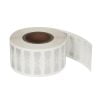
An embedded RFID solution involves embedding ultra-miniature UHF RFID tags directly into production carriers (such as FOUPs, MTCs, or lead frame trays) or equipment components, thereby transforming them into inseparable carriers of digital identity.
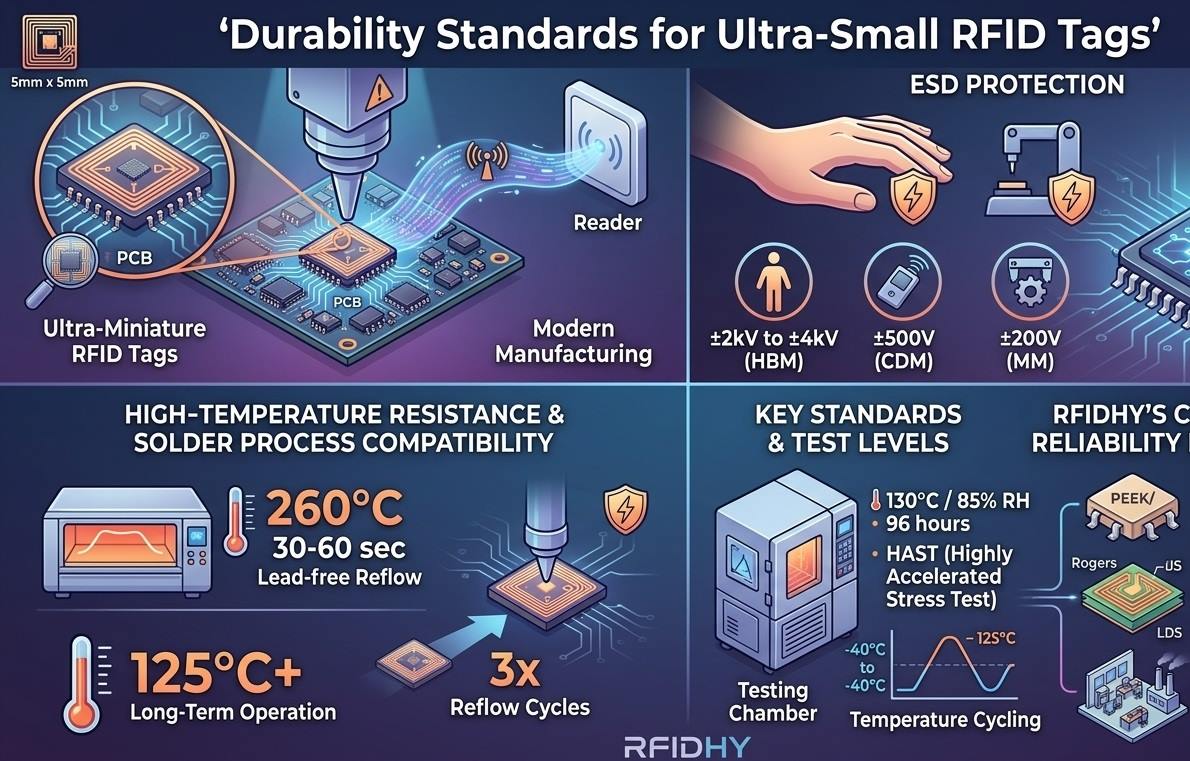
Unlike traditional externally affixed labels, embedded tags are integrated directly into the carrier structure—typically via Surface Mount Technology (SMT) or injection molding processes. This integration allows them to withstand harsh conditions—including 260°C reflow soldering, chemical cleaning, and physical abrasion—while maintaining stable performance throughout their entire lifecycle.
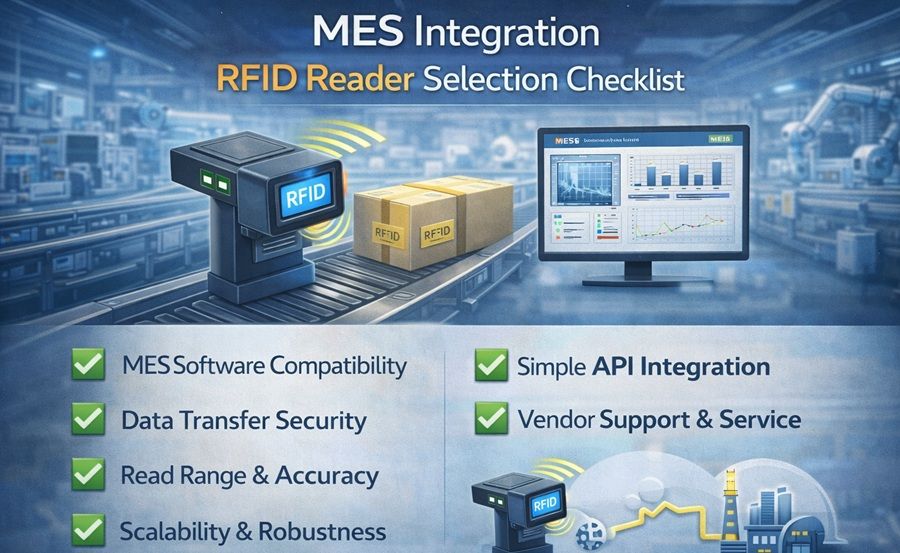
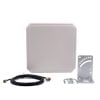
This solution typically comprises: high-temperature-resistant, anti-metal tags (e.g., those packaged with Impinj Monza R6 or NXP UCODE 9 chips); fixed-position RFID readers compliant with SECS/GEM protocols; and a middleware platform deeply integrated with the Manufacturing Execution System (MES).
2.The Key Path to a 30% Increase in Anomaly Detection Rates
The packaging plant deployed its embedded RFID solution to address three core pain points:
- Automated Binding of Carriers and Process Parameters: RFIDHY’s custom HT-series tags (rated for high temperatures up to 260°C and certified under the JEDEC J-STD-020 standard) were embedded into every lead frame tray and wafer cassette. When a carrier enters a pick-and-place machine or a reflow oven, the RFID reader automatically scans the tag ID. Simultaneously, the Equipment Automation Program (EAP) collects real-time equipment parameters—such as the current Recipe ID and temperature profile—thereby establishing a real-time “Carrier-to-Process” binding. If any parameter deviates from its pre-configured range, the system immediately triggers an automated early warning alert.
- End-to-End Material Flow Transparency: RFID readers/writers are deployed at every station within the Automated Material Handling System (AMHS) to track carrier locations in real-time. If a carrier is detected lingering at a specific workstation beyond the allotted time (e.g., exceeding the standard cycle time), the system immediately issues a warning, alerting operators to potential material bottlenecks or equipment malfunctions. Through real-time data comparison, the time required to pinpoint the location of an anomaly has been reduced from days to mere minutes.
- Historical Data Traceability and Root Cause Analysis: All associated process data and material flow records are uploaded to the Manufacturing Execution System (MES) to generate a complete Electronic Batch Record (EBR). Should final testing reveal an abnormal yield rate, engineers can instantly—within seconds—trace back to the specific machine, process parameters, and material batch involved, thereby rapidly identifying the root cause and enabling a closed-loop process for implementing corrective actions.
3.Core Benefits Comparison Table
| Metric | Traditional Mode | Embedded RFID Mode | Improvement Margin |
| Process Anomaly Detection Rate | 65% (Relies on manual spot checks) | >95% (Automated real-time monitoring) | +30% |
| Anomaly Localization Time | Avg. 4 hours (Manual troubleshooting) | <5 minutes (Automated system alerts) | 70% Reduction |
| Process Parameter Binding Accuracy | ~90% (Prone to manual scanning errors) | 99.9% (Automated binding) | +10% |
| Carrier Search Time | 20 minutes/instance (Manual searching) | Real-time visibility; no searching needed | >90% Reduction |
4.Key to Success: RFIDHY’s Customized Integration Capabilities
The success of this project was made possible by deeply customized services. The semiconductor packaging plant environment is complex; standard RFID tags cannot withstand the 175°C high temperatures encountered during the plastic encapsulation process or the highly corrosive nature of plating solutions. RFIDHY developed a custom solution featuring ultra-compact, ceramic-encapsulated embedded tags. These tags utilize a gold-wire bonding process to ensure long-term stability and reliability even when exposed to extreme thermal shock and harsh chemical environments. Furthermore, RFIDHY developed an edge computing gateway to push reader/writer data to the MES in real-time via the SECS/GEM protocol, achieving seamless integration with the existing Equipment Automation Program (EAP) system without requiring any modifications to the upper-layer software.
5.Q&A
Q1:Can the lifespan of the embedded RFID tags cover the entire lifecycle of the packaging carriers?
A:Yes, it can. Professionally designed embedded tags (such as the RFIDHY industrial-grade series) utilize ceramic or PEEK encapsulation and contain no internal batteries, offering a theoretically infinite lifespan. Validated through HAST and thermal cycling tests, their data retention and read performance are proven to meet the demands of industrial applications for over 10 years—far exceeding the typical depreciation cycle of the carriers themselves.
Q2: Does implementing this system require halting production for retrofitting?
A: No, production downtime is not required. RFIDHY employs a phased deployment strategy: we begin with a pilot run on newly established production lines or spare carriers, while allowing the existing barcode system to operate in parallel. Once data stability has been verified, a gradual transition is initiated. The installation of RFID readers is scheduled during routine equipment maintenance windows, ensuring zero disruption to normal production operations.
Q3: How can RFID data acquisition be implemented for facilities with a large installed base of legacy equipment?
A: Legacy equipment often lacks standard SECS/GEM interfaces. In such cases, external sensors (e.g., photoelectric switches) and PLCs can be deployed; by integrating these with an RFIDHY edge computing gateway, equipment status signals are converted into standardized events, which are then interfaced with the MES via OPC UA or MQTT protocols. This flexible solution ensures compatibility with equipment of various vintages.
Conclusion
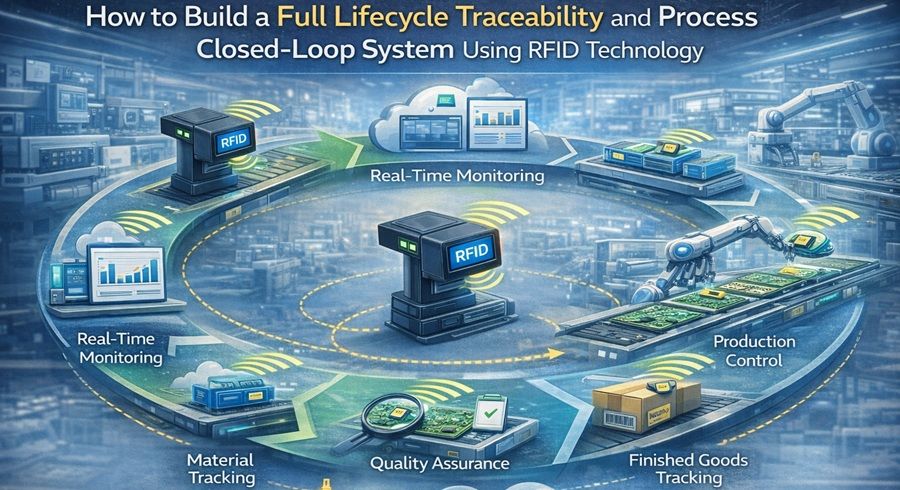
By deploying embedded RFID solutions, leading semiconductor packaging facilities have not only boosted their process anomaly detection rate by 30% but have also established a comprehensive, full-lifecycle traceability system—spanning from raw material inbound to finished product outbound—thereby laying a solid data foundation for the digital factory. Partnering with a provider like RFIDHY—one that possesses deep customization capabilities and extensive experience within the semiconductor industry—is the key to ensuring rapid project implementation and maximizing return on investment.
Leave your contact detail now to get the latest price!