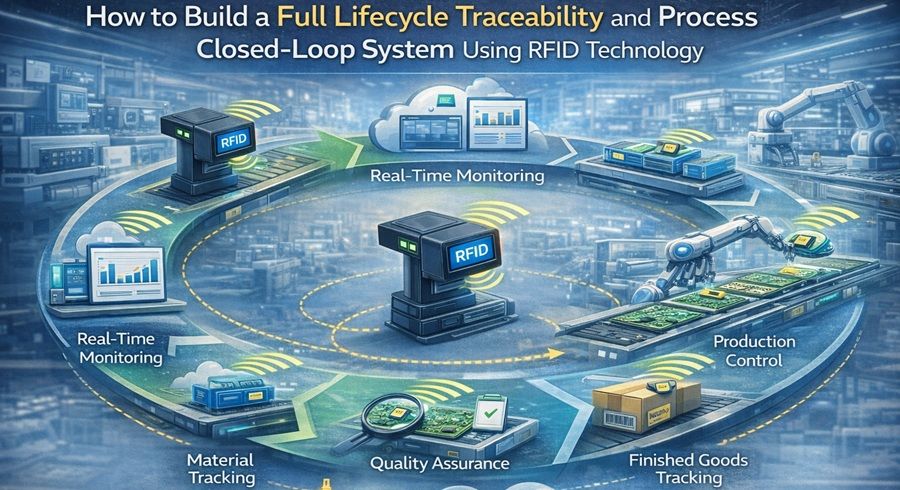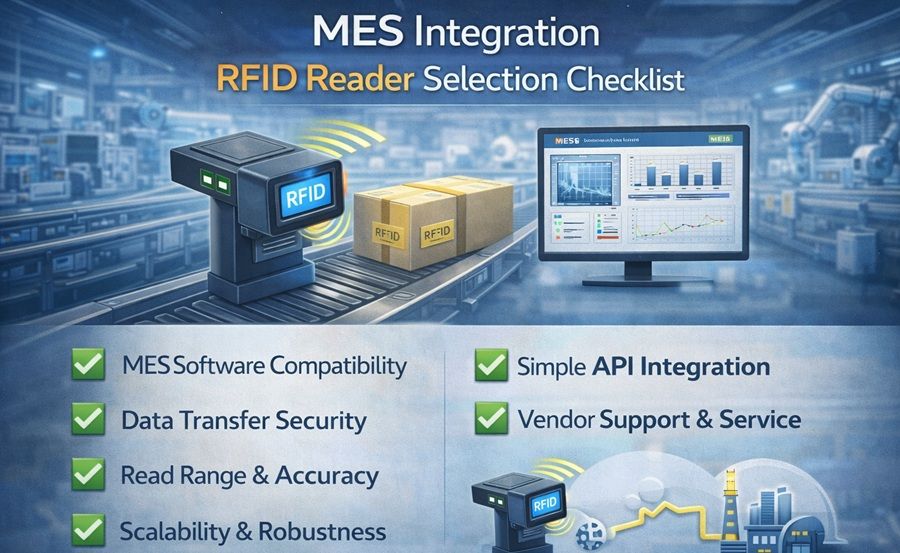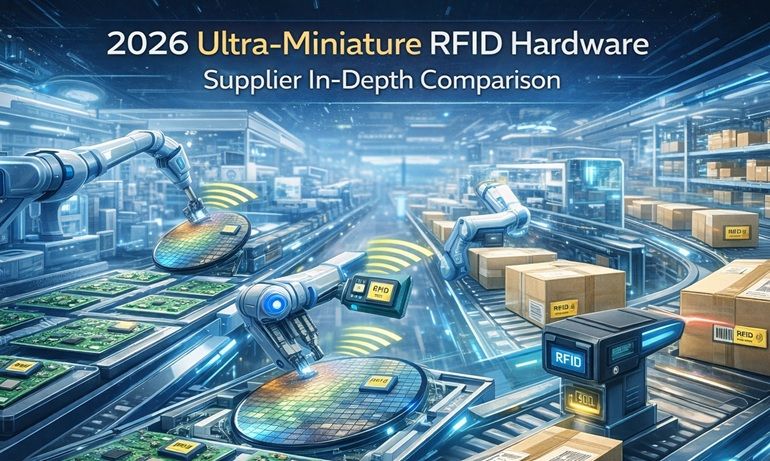
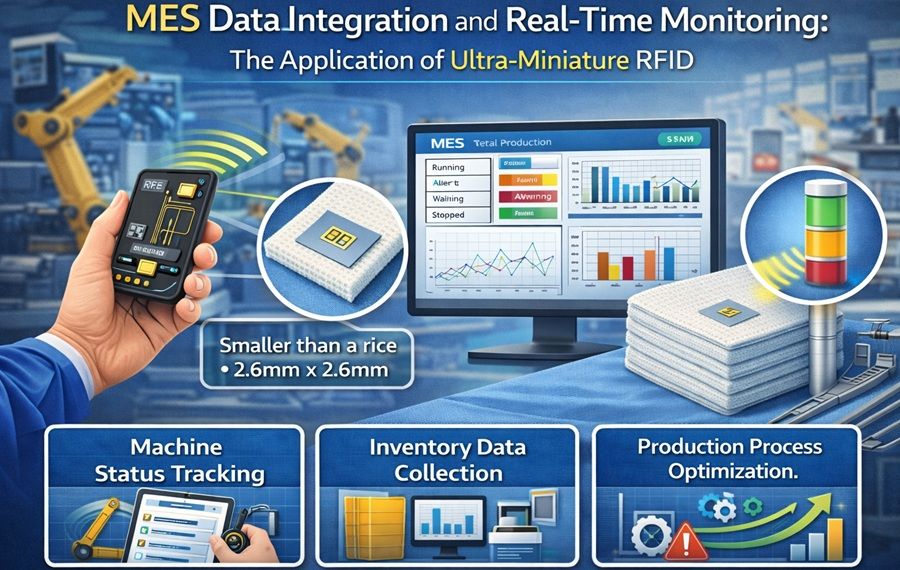
In the field of precision electronics manufacturing, where the pursuit of ultimate efficiency and quality is paramount, Manufacturing Execution Systems (MES) are the core brain of production management. However, a common bottleneck limits its potential: gaps in production data. When SMT trays, PCBA boards, or semiconductor wafer boxes move between equipment, their real-time status, process parameters, and historical information often cannot be automatically and accurately captured by the MES, resulting in a production process that resembles a “black box.” Ultra-micro RFID technology is the key bridge connecting the physical flow and information flow, enabling MES data integration and process transparency.
The Challenge of MES Data Gaps: From “Black Box” to Transparency
Traditional barcodes or manual recording are prone to errors in high-speed, high-mix production lines. Data shows that production traceability failures due to data delays or errors can result in up to 5% loss in capacity and quality. The core problems include:
- Inability to locate precisely in real time: It is difficult to automatically obtain the real-time location and status of each production carrier (such as trays conforming to JEDEC standards).
- Disconnection of process parameters: Key data such as solder paste printing pressure, pick-and-place machine nozzle number, and reflow soldering temperature curve are difficult to automatically associate with specific product units.
- Lack of data fuel for digital twins: Without fine-grained real-time data streams, building a digital twin of the production line for simulation and optimization is impossible.
Ultra-Micro RFID Solution: Unit-Level Real-Time Data Acquisition
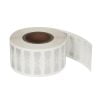
UHF ultra-micro RFID tags, with their millimeter-scale size, non-line-of-sight batch reading capabilities, and resistance to high temperatures in SMT workshops, are ideal data carriers. Comparison of Different Data Acquisition Methods:
| Feature | Manual Recording/Barcode | Fixed Barcode Scanner | Ultra-Micro UHF RFID |
| Automation Level | Low | Medium | High |
| Data Real-time | Delayed (hours) | Near Real-time (seconds) | Real-time (milliseconds) |
| Applicable Scenarios | Low-speed, discrete workstations | Fixed-cycle conveyor belts | High-mix production lines, AGVs, dense warehousing |
| Value for MES Integration | Low, easily creates data silos | Medium, dependent on positioning | High, provides continuous data stream |
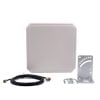
By embedding ultra-miniature tags integrated with Impinj M780 or Alien Higgs-9 chips into production carriers (such as FOUPs), and deploying readers at key workstations, the system can automatically:
- Trigger MES work orders: When a carrier arrives, the system automatically retrieves the corresponding process recipe from the MES.
- Bind full-process data: Bind real-time parameters from the equipment PLC (such as welding curves) with the carrier ID and upload them to the MES database, creating a complete electronic manufacturing history.
- Drive real-time monitoring dashboards: Dynamically display work-in-progress (WIP) locations, workstation utilization, and bottlenecks, achieving global visibility.
Practical Value: Towards Digital Twins and Intelligent Decision-Making
After deploying ultra-micro RFID, companies can not only achieve real-time monitoring but also:
- Implement proactive quality control: When a reflow soldering temperature curve for a batch is detected to be out of tolerance, the system can automatically lock the batch of products and trigger an alarm, enabling proactive intervention.
- Build a digital twin of the workshop: The continuous, high-fidelity data stream powers the virtual model, supporting advanced analysis such as capacity simulation and line change optimization.
- Meet stringent traceability requirements: Easily meet ISO 9001 and customer audit requirements, achieving full-chain traceability of product history.
Key to Success: RFIDHY’s Deep Customization Capabilities
The electronic manufacturing environment is complex (metal interference, high temperature, limited space), and general-purpose tag solutions are highly prone to failure. RFIDHY’s core advantage lies in providing deeply customized solutions. For example, for miniature semiconductor lead frames, a tag with dimensions of 2.6mm x 2.6mm can be designed; for carriers that need to go through wave soldering, a special tag resistant to 260°C high temperatures is provided. This end-to-end engineering capability, from chip selection and anti-metal antenna design to industrial-grade packaging, is fundamental to ensuring stable system operation.
Q&A
1.How do RFID systems integrate with existing MES systems such as SAP ME and Camstar?
Through middleware such as RFIDHY Edgeware, which provides standard RESTful API or OPC UA interfaces, filtered real-time business events (such as “pallet A enters the placement station”) can be directly pushed to the MES, achieving seamless MES data integration.
2.How does RFID ensure read rates on a PCBA production line full of metal components?
This relies on professional customized design. RFIDHY conducts on-site radio frequency surveys and designs dedicated anti-metal tags and antenna layout solutions to effectively overcome interference and achieve near 100% reading reliability in complex environments.
3.Where are the main areas of ROI for this type of project?
The main ROI includes:
1) Increased efficiency: reducing manual scanning time by over 70%;
2) Reduced quality costs: quickly locating the root cause of problems through precise traceability;
3) Faster inventory turnover: improving work-in-progress visibility;
4) Compliance assurance: automatically generating audit reports.
The typical payback period is within 12-18 months.
Conclusion
Ultra-small RFID technology is an effective solution to address data gaps in precision electronics manufacturing MES. By providing automated, real-time unit-level data, it not only achieves process transparency and real-time monitoring but also serves as the core data engine for building digital twins and moving towards Industry 4.0. Choosing a partner with strong customized engineering capabilities like RFIDHY is key to ensuring successful technology implementation and maximizing value.
Leave your contact detail now to get the latest price!