Why RFID Surgical Instrument Tracking Must Meet FDA Standards
For healthcare providers managing reusable surgical instruments, RFID tracking is no longer just about efficiency—it’s a regulatory imperative. The U.S. Food and Drug Administration (FDA) requires strict traceability under 21 CFR Part 820 (Quality System Regulation) and the Unique Device Identification (UDI) rule. Misplaced or unsterilized instruments pose direct patient safety risks, triggering FDA scrutiny during inspections. RFID systems deployed in sterile processing departments (SPDs) must ensure data accuracy, system validation, and secure audit trails—requirements that extend beyond basic read/write functionality.
Core FDA Requirements for RFID-Enabled Instrument Management
The FDA evaluates RFID deployments through three interlocking frameworks:
- UDI Compliance: Each instrument must carry a permanent, machine-readable UDI carrier (e.g., etched or embedded RFID tag) compliant with ISO/IEC 15459 and GS1 standards.
- Quality System Regulation (21 CFR Part 820): RFID hardware, software, and operational procedures must be validated, documented, and subject to change control and periodic requalification.
- Data Integrity (ALCOA+ Principles): Records of sterilization cycles, usage history, maintenance logs, and location tracking must be attributable, legible, contemporaneous, original, accurate, complete, consistent, enduring, and available.
Selecting FDA-Ready RFID Hardware
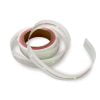
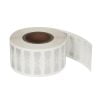
Not all RFID tags perform reliably in high-humidity, autoclave-intensive environments. For surgical trays and stainless steel instruments, on-metal UHF RFID tags with IP68/IP69K ratings and temperature resistance up to 135°C are essential. These must retain data integrity across repeated sterilization cycles without delamination or signal loss. RFIDHY offers a full line of healthcare-grade RFID solutions, including validated anti-metal RFID tags engineered for metal instrument surfaces.
Validation and Documentation Best Practices
Per FDA guidance, RFID system validation includes Installation Qualification (IQ), Operational Qualification (OQ), and Performance Qualification (PQ). Critical tests include:
| Test Type | Purpose | Acceptance Criteria |
|---|---|---|
| Read Range Consistency | Verify detection across tray configurations and sterilization states | ≥99.9% read rate at 0.5m in wet/metal conditions |
| Data Retention After Autoclaving | Confirm memory integrity post-100+ steam sterilization cycles | Zero bit errors; EPC and TID unchanged |
| Software Audit Trail | Validate timestamped, user-attributed event logging | Immutable logs meeting 21 CFR Part 11 electronic record requirements |
Integrating RFID with Sterile Processing Workflows
Successful deployment aligns RFID technology with existing SPD workflows—not disrupt them. Key integration points include:
- Instrument identification at decontamination intake using fixed RFID portals
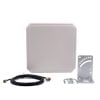
- Automated tray reconciliation before sterilization using handheld readers like the HY-R530 UHF desktop RFID reader/writer
- Real-time location tracking of trays across storage, sterilization, and distribution zones
RFIDHY’s healthcare RFID product category includes purpose-built readers, antennas, and validated tag kits designed specifically for sterile processing compliance.
Frequently Asked Questions
Does the FDA approve specific RFID tags or readers?
No—the FDA does not certify individual RFID components. Instead, it evaluates the entire system as part of your quality management system (QMS), including how tags, readers, software, and SOPs collectively ensure traceability and data integrity.
Can standard UHF RFID tags be used on surgical instruments?
No. Standard tags fail on metal and degrade under autoclave conditions. Only validated on-metal UHF RFID tags—such as those in RFIDHY’s anti-metal RFID tag series—meet FDA-aligned durability requirements.
Is UDI labeling required for every individual instrument?
Yes—if the instrument is labeled as a Class I, II, or III device and is intended for multiple uses. Each instrument must bear a permanent UDI carrier (e.g., laser-etched or embedded RFID) that survives cleaning, sterilization, and reuse.
Ensure Your RFID Surgical Tracking System Meets FDA Expectations
RFIDHY provides fully documented, healthcare-validated RFID solutions—including anti-metal tags, fixed and handheld readers, and integration support—for sterile processing departments seeking audit-ready compliance. Our engineering team assists with IQ/OQ/PQ documentation, UDI mapping, and workflow alignment.
Contact our healthcare RFID specialists today to request a compliance-readiness assessment and customized solution package.
Leave your contact detail now to get the latest price!