Understanding FDA UDI Requirements
The U.S. Food and Drug Administration (FDA) mandates Unique Device Identification (UDI) for medical devices to enhance traceability, improve patient safety, and streamline post-market surveillance. Under 21 CFR Part 830, manufacturers must assign a unique identifier to each device version or model and ensure it appears on labels and packaging in both human-readable and AIDC (Automatic Identification and Data Capture) formats — such as barcodes or RFID tags.
Why RFID Supports UDI Compliance
Unlike static barcodes, RFID chips enable contactless, bulk-read identification — critical for high-throughput manufacturing, sterile packaging lines, and warehouse environments where line-of-sight scanning is impractical. UHF RFID tags, in particular, support read ranges up to 10 meters and withstand autoclaving, gamma sterilization, and chemical exposure when engineered for healthcare use.
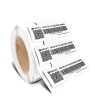
For manufacturers seeking durable, compliant solutions, RFIDHY’s healthcare-grade RFID tags are designed for integration into surgical instrument trays, implant packaging, and reusable transport items (RTIs), supporting full lifecycle traceability aligned with UDI Rule §830.20.
Key Implementation Considerations
Successful UDI-RFID integration requires attention to three pillars:
- Tag Selection: Choose UHF or HF RFID tags certified for biocompatibility and sterilization resilience — e.g., medical-grade RFID inlays validated for ISO 13485 environments.
- Data Structure: Encode UDI-DI (Device Identifier) and UDI-PI (Production Identifier) in standardized EPC Gen2 memory banks per GS1 Digital Link and FDA specifications.
- System Interoperability: Ensure RFID readers and middleware integrate with existing ERP, MES, and UDI submission platforms like the FDA’s GUDID.
Comparing UDI-Compliant Technologies
| Technology | UDI Read Range | Bulk Read Capable | Sterilization Resilience |
|---|---|---|---|
| Linear Barcode | Line-of-sight only | No | Low (ink degradation) |
| 2D Matrix Code | <15 cm | No | Moderate (laser etch preferred) |
| UHF RFID Tag | Up to 10 m | Yes (100+ units/sec) | High (validated for 134°C steam, gamma, EtO) |
FAQ
Do FDA UDI rules require RFID specifically?
No — the FDA permits any AIDC technology that meets data accuracy, durability, and readability requirements. However, RFID tags offer distinct advantages for high-volume, automated, or non-line-of-sight use cases common in medical device manufacturing and distribution.
Can I use standard RFID chips for UDI encoding?
Only if they meet memory capacity (minimum 96 bits for UDI-DI + PI), write-lock security, and environmental validation per ISO 15459 and ASTM F2826. RFIDHY’s certified RFID chips support EPC Gen2v2 and comply with healthcare serialization standards.
Are there pre-certified RFID tag models for FDA-regulated applications?
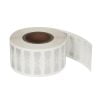
While the FDA does not certify individual RFID tags, third-party labs validate performance under ISO 10993 and AAMI TIR42. RFIDHY offers medical-grade RFID labels with documentation packages supporting internal validation protocols.
Ensure UDI Compliance with Trusted RFID Solutions
RFIDHY provides end-to-end support — from UDI-aligned RFID tag selection and pilot validation to enterprise-scale deployment. Our engineering team collaborates with quality and regulatory stakeholders to align hardware, software, and documentation with FDA expectations.
Contact our regulatory solutions specialists today to request a UDI-RFID readiness assessment and technical datasheets for healthcare-qualified RFID chips and inlays.
Leave your contact detail now to get the latest price!