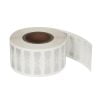
Enabling Circularity with Industrial-Grade RFID Tags
As global regulatory frameworks tighten around extended producer responsibility (EPR) and sustainability reporting, enterprises require verifiable, automated systems to track products across their entire lifecycle—from raw material sourcing and manufacturing to distribution, use, return, refurbishment, and final recycling. Passive UHF RFID tags offer a scalable, battery-free foundation for this traceability, delivering unique identification, read-range flexibility (up to 15 meters), and resilience in harsh industrial environments.
How RFID Supports Each Stage of the Circular Lifecycle
Unlike barcodes or manual logs, RFID tags embedded in durable assets or high-value consumables persist across multiple ownership and usage phases. At RFIDHY, our warehouse and logistics RFID tags are engineered for repeated scanning in dynamic settings—whether affixed to reusable transport items (RTIs), industrial containers, or modular equipment frames. For applications demanding chemical resistance and thermal stability—such as textile rental or medical device reprocessing—RFID laundry tags provide certified durability through hundreds of wash cycles.
Integration Architecture for Enterprise Traceability
A successful circular deployment requires more than tags—it demands interoperable hardware, middleware, and data governance. Fixed RFID readers like the HY-RU6508 8-port fixed reader automate gate-level inventory handoffs at inbound/outbound docks, while handheld readers validate returns and refurbishment status on the shop floor. All data feeds into centralized ERP or EAM platforms via standardized APIs—ensuring audit-ready lineage without siloed spreadsheets.
Compliance and Data Integrity Considerations
Circular economy reporting increasingly mandates ISO 59010 (Circular Economy Management Systems) and EU Digital Product Passports (DPP). RFID-enabled digital twins—where each physical item maps to a persistent, tamper-evident digital record—provide foundational evidence for certifications. Because passive RFID tags store no personal data and operate offline unless actively scanned, they align with GDPR and CCPA principles of data minimization—making them ideal for B2B asset tracking where privacy-by-design is non-negotiable.
FAQ
- Can standard RFID tags withstand outdoor or industrial conditions? Yes—industrial UHF RFID tags from rfidhy.com’s anti-metal line feature IP68-rated enclosures and operate reliably on metal surfaces, in extreme temperatures (-40°C to +85°C), and under UV exposure.
- How do I ensure tag longevity across multiple product lifecycles? Select tags with proven mechanical endurance—e.g., epoxy-encapsulated inlays or stainless-steel-mountable variants. RFIDHY’s equipment rental RFID solutions include tags validated for >5 years of continuous field use.
- Do RFID tags support integration with ERP or PLM systems? Absolutely. All RFIDHY readers and middleware support RESTful APIs and standard protocols (LLRP, MQTT), enabling seamless synchronization with SAP, Oracle, and Infor systems without custom development.
Ready to Build Your Circular Traceability Framework?
RFIDHY delivers purpose-built RFID tags, readers, and implementation guidance tailored to circular economy requirements—including DPP readiness, RTI optimization, and closed-loop remanufacturing. Contact our enterprise solutions team today for a technical assessment and customized architecture review.
Leave your contact detail now to get the latest price!