What Are Chipless RFID Tags?
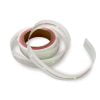
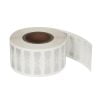
Chipless RFID tags eliminate the silicon microchip traditionally used in passive UHF and HF RFID tags. Instead, they encode identification data through resonant structures—such as dipole arrays, surface acoustic wave (SAW) elements, or frequency-selective surfaces—etched or printed onto flexible substrates. This architecture reduces unit cost and enables high-volume, roll-to-roll manufacturing.
Current Technical Limitations
While promising for ultra-low-cost applications, chipless RFID remains constrained by several factors critical to enterprise adoption:
- Read range: Typically under 1 meter in real-world conditions—significantly shorter than standard UHF RFID tags for warehouse management.
- Environmental resilience: Susceptible to moisture, metal proximity, and mechanical abrasion without robust encapsulation—unlike industrial-grade anti-metal RFID tags engineered for harsh logistics environments.
- Standardization & interoperability: No ISO/IEC 18000-63 or EPC Gen2 compliance, limiting integration with existing enterprise RFID infrastructure.
Where Chipless Tags *May* Fit Today
Limited-use cases exist where low read range, modest durability, and batch-level identification suffice—including short-range item authentication in retail packaging or disposable event wristbands. However, these remain niche: most enterprise customers require deterministic read reliability, multi-tag concurrency, and long-term durability across thousands of scan cycles.
Performance Comparison: Chipless vs. Conventional RFID Tags
| Parameter | Chipless RFID | Conventional UHF RFID (e.g., RFIDHY HY-RFID-915) |
|---|---|---|
| Typical Read Range | 0.3–0.8 m | 3–12 m (depending on antenna & environment) |
| Data Capacity | <128 bits (static ID only) | 96–1024+ bits (EPC + user memory) |
| Durability (Cycles) | Limited (no standardized testing) | 10,000+ scans (per RFIDHY equipment rental tracking tags) |
FAQ
Can chipless RFID tags replace conventional RFID tags in supply chain tracking?
No. Their limited read range, lack of EPC Gen2 compliance, and absence of field-proven durability make them unsuitable for pallet, container, or vehicle-level tracking at scale.
Do RFIDHY or rfidhy.com offer chipless RFID tags?
No. Both RFIDHY and rfidhy.com focus exclusively on certified, silicon-based RFID tags engineered for industrial reliability—including laundry tags, healthcare RFID tags, and anti-metal variants.
Are there any commercially deployed chipless RFID systems today?
A few pilot implementations exist in academic or lab settings, but no verified large-scale enterprise deployments are documented in public case studies or standards bodies (e.g., GS1, AIM Global).
Ready to Deploy Proven RFID Solutions?
For mission-critical inventory accuracy, asset visibility, and compliance-driven tracking, RFIDHY’s certified UHF and HF RFID tags deliver guaranteed performance—backed by real-world validation across logistics, healthcare, and manufacturing. Explore our full catalog of industrial RFID tags and request a technical consultation tailored to your operational requirements.
Leave your contact detail now to get the latest price!