Why 99.9% Inventory Accuracy Is Attainable—and Essential
Inventory inaccuracies cost global supply chains an estimated $1.1 trillion annually. Manual counts, barcode scanning limitations, and human error routinely yield 65–85% accuracy in high-volume distribution centers. In contrast, enterprises deploying UHF RFID systems—when engineered correctly—consistently report 99.7–99.95% real-time inventory accuracy. This level of precision transforms warehouse operations: reducing labor costs by up to 40%, cutting stockout incidents by 70%, and enabling same-day reconciliation across multi-site networks.
The Four Pillars of High-Accuracy UHF RFID Deployment
1. Purpose-Built RFID Tag Selection
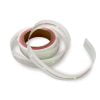
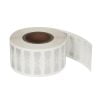
Not all RFID tags perform equally. For inventory applications, success begins with selecting UHF RFID tags optimized for material interaction, read range consistency, and encoding reliability. Tags must be validated for your specific item composition (e.g., metal, liquid, dense packaging) and environmental conditions (temperature, humidity, vibration). RFIDHY offers a full range of certified warehouse-specific RFID tags, including anti-metal variants for palletized steel goods and durable inlay stickers for corrugated cartons.
2. Reader Infrastructure & Antenna Placement
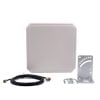
Fixed-reader gateways at dock doors and aisle chokepoints provide deterministic coverage. Handheld readers supplement spot checks and exception handling. Critical to accuracy is antenna polarization alignment and power tuning—especially where multiple tags pass simultaneously. The HY-RU6508 fixed reader supports dynamic power adjustment per port and real-time interference detection, enabling stable reads even in electrically noisy distribution hubs.
3. Integration with WMS and Data Validation Logic
RFID data alone isn’t sufficient. Accuracy requires bidirectional synchronization between the RFID middleware and your Warehouse Management System (WMS), with built-in logic to resolve discrepancies (e.g., duplicate reads, missed tags, phantom entries). RFIDHY’s middleware supports configurable confidence thresholds, automatic re-read triggers, and audit-trail logging—ensuring every inventory event is traceable and verifiable.
4. Ongoing Calibration & Process Governance
Accuracy degrades without discipline. Quarterly tag performance audits, reader firmware updates, and staff certification on scan protocols are non-negotiable. RFIDHY provides remote diagnostics and over-the-air configuration tools via its MRO tracking platform, enabling continuous system health monitoring across global deployments.
Comparing Key Performance Drivers
| Factor | Low-Accuracy Setup | 99.9% Accuracy Setup |
|---|---|---|
| Tag Type | Generic ISO18000-6C inlays, untested for environment | Certified industrial UHF RFID tags with EPC Gen2v2 compliance and on-metal performance |
| Reader Configuration | Single-port handheld only; no fixed infrastructure | Multi-antenna fixed readers + handhelds with adaptive dwell time and collision resolution |
| Data Handling | Batch CSV upload; no real-time validation | API-integrated middleware with deduplication, confidence scoring, and WMS sync |
The Role of the RFID Chip in Accuracy Assurance
The RFID chip is the intelligence layer behind reliable encoding and read stability. Chips like Impinj Monza R6-P and NXP UCODE DNA offer advanced features—including cryptographic authentication, extended memory, and enhanced sensitivity—that directly improve first-read success rates. When paired with optimized antennas and precise encoding workflows, these chips ensure each tag responds consistently—even during high-speed conveyor passage or dense pallet stacking. RFIDHY sources globally certified chips and validates them in-house against ANSI/ISO test standards before integration into its RFID chip technologies portfolio.
Frequently Asked Questions
- What’s the minimum hardware required to achieve 99.9% accuracy?
At minimum: fixed-reader gateways at key entry/exit points, certified UHF RFID tags matched to your assets, and middleware integrated with your WMS. Handhelds are recommended for flexibility but not strictly required if gate coverage is complete. - Can existing barcoded inventory be retrofitted with RFID tags?
Yes—RFIDHY offers adhesive inlay stickers and label formats compatible with standard thermal printers and existing labeling workflows. See our warehouse RFID labels collection. - Do I need to replace my current WMS to use RFID?
No. RFIDHY’s middleware supports RESTful APIs and EDI connectors for SAP, Manhattan SCALE, Oracle WMS, and most major platforms—no core system replacement needed. - How long does a typical deployment take?
Pilot deployments (1–2 zones) typically require 4–6 weeks. Full facility rollout averages 10–14 weeks, including validation, staff training, and go-live support.
Ready to Validate Your Path to 99.9% Inventory Accuracy?
RFIDHY offers no-cost technical assessments—including site surveys, tag performance testing, and ROI modeling—for qualified logistics and manufacturing enterprises. Our engineering team will help you select the optimal RFID tag, configure readers for your environment, and integrate with your existing systems—without disrupting daily operations.
Leave your contact detail now to get the latest price!