Why Autoclavable RFID Tags Are Essential in Modern Healthcare
Reusable surgical instruments, endoscopes, implant trays, and laboratory glassware undergo repeated autoclaving—a high-pressure saturated steam process at 134°C for 3–5 minutes—to achieve sterility assurance levels (SAL) of 10−6. Conventional RFID tags fail under these conditions due to delamination, antenna corrosion, or IC degradation. Autoclavable RFID tags, however, are engineered with thermally stable substrates (e.g., PEEK, ceramic, or reinforced polyimide), hermetically sealed IC encapsulation, and on-metal compatible antenna designs that retain consistent read range and data integrity after 500+ sterilization cycles.
Technical Requirements for True Autoclave Compatibility
Not all ‘high-temp’ RFID tags qualify as autoclavable. True autoclavability requires conformance to ISO 17664 (reprocessing validation) and AAMI ST79 (comprehensive steam sterilization guidelines). Critical parameters include:
- Temperature resistance: Sustained operation at 134°C (not just short-term peak tolerance)
- Pressure resistance: Withstanding 2.1–3.0 bar saturated steam pressure
- Chemical resistance: Immunity to condensate, alkaline detergents, and enzymatic cleaners
- RF performance retention: Stable read range (>1.5 m UHF) and EPC memory write endurance post-cycle
RFIDHY’s Certified Autoclavable RFID Tag Solutions
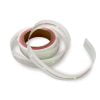
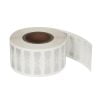
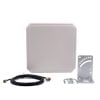
RFIDHY offers a family of industrial-grade UHF RFID tags validated for repeated 134°C autoclaving—including rigid PEEK-encapsulated tags for instrument trays and flexible ceramic-inlay labels for curved surfaces like endoscope housings. All models feature Impinj Monza R6-P or R8 ICs and comply with EPC Gen2v2 standards. They are fully compatible with fixed readers such as the HY-RU6508 8-port fixed reader and handheld units like the HY-R530-U desktop reader-writer, enabling seamless integration into hospital central sterile supply departments (CSSD) and lab inventory systems.
Deployment Best Practices in Clinical Settings
Successful implementation hinges on placement strategy and environmental calibration. Tags mounted directly on stainless-steel instruments require on-metal optimized designs—such as RFIDHY’s anti-metal RFID tags—to mitigate detuning. For reusable containers or sterilization cassettes, embedded tags within polymer lids ensure protection without compromising scan reliability. Validation should include cycle logging (temperature, pressure, dwell time) and periodic read-range verification using standardized test fixtures per ISO/IEC 18000-63.
Comparative Performance: Autoclavable vs. Standard High-Temp Tags
| Parameter | Autoclavable RFID Tag | Standard High-Temp Tag |
|---|---|---|
| Max Sustained Temp | 134°C (steam-saturated) | 125°C (dry air only) |
| Sterilization Cycles | ≥500 cycles (validated) | ≤50 cycles (degradation observed) |
| Chemical Resistance | AAMI-compliant enzymatic & alkaline cleaners | Limited resistance; coating erosion |
| Read Range Retention | >1.5 m (UHF, post-500 cycles) | <0.8 m (significant drift) |
FAQs
What materials are used in RFIDHY’s autoclavable RFID tags?
RFIDHY uses medical-grade PEEK (polyether ether ketone) and alumina ceramic substrates with gold-plated antennas and hermetically sealed Impinj Monza R6-P or R8 ICs—ensuring zero moisture ingress and thermal stability up to 134°C.
Can these tags be embedded directly into surgical instrument handles?
Yes. RFIDHY offers custom embeddable variants with flush-mount geometry and epoxy-compatible adhesion layers, designed for integration during OEM manufacturing—see our healthcare RFID product category.
Do they comply with FDA or CE marking requirements?
While RFID tags themselves are not FDA-regulated devices, RFIDHY’s autoclavable tags are manufactured under ISO 13485-certified processes and supplied with full biocompatibility documentation (ISO 10993-5/10) upon request for Class I/II medical device traceability applications.
Ready to Implement Reliable Autoclavable RFID Tracking?
Whether you’re digitizing CSSD workflows, managing reusable lab assets, or building a smart sterilization audit trail, RFIDHY provides validated, scalable solutions backed by engineering support and global logistics. Request a technical datasheet, sample kit, or schedule a sterilization-cycle validation consultation with our healthcare RFID specialists today.
Leave your contact detail now to get the latest price!